Bay to Bay News: Delawareans voice solutions to community violence at DSU summit

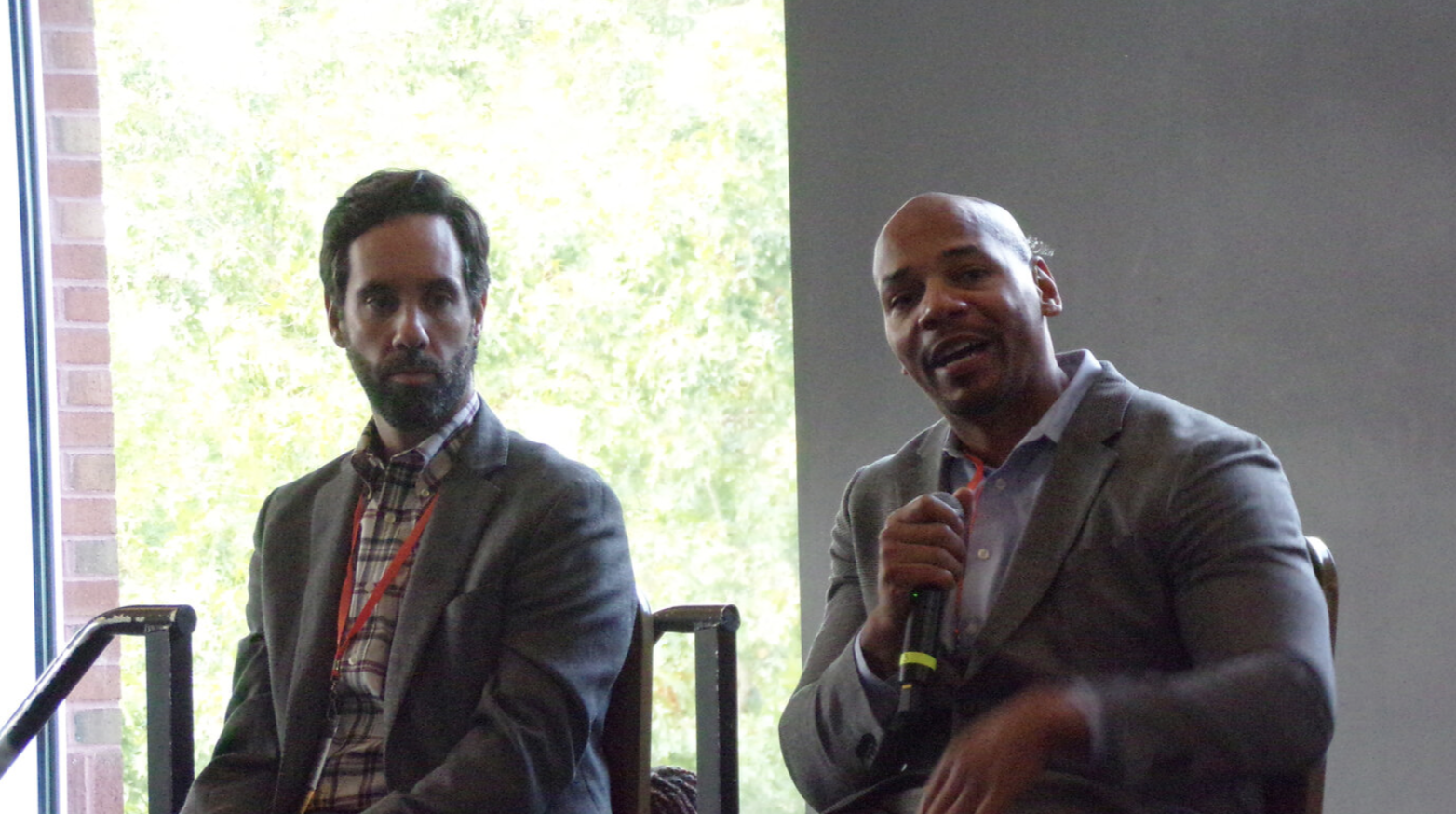
Two men sitting in chairs. One man is holding a microphone and speaking.

DOVER — Delaware State University and End Community Violence Now hosted an inaugural joint summit Oct. 14, allowing attendees to hear from experts in crime prevention and to share their thoughts.

During one panel, leaders in the prevention of community violence, domestic violence and suicide provided insight into their field, then asked visitors to form small groups to identify shared priorities, to map short-term goals and to propose metrics to track progress.

In one breakout, Laurel Town Councilman Jonathan Kellam suggested synchronized gun regulations statewide, citing Delaware’s House Bill 125, passed in 2021. With that legislation, lawmakers attempted to ban the manufacturing, possession and sale of “ghost guns” — firearms that are made by individual citizens and that don’t have serial numbers, therefore making them untraceable.

However, in 2022, Delaware District Court Judge Maryellen Norieka issued a temporary injunction on sections of the measure, due to a lawsuit brought against the state by the Firearms Policy Coalition, a California nonprofit, shortly after it was passed.

The injunction was placed on the ban of possession and manufacturing of homemade firearms, with the distribution of such guns still deemed illegal.

Councilman Kellam said that, while the General Assembly was conducting research to get this bill approved, members heard a common thread between suicide and homicide: the use of guns.

“(But) it’s not trying to take anyone’s guns away,” he clarified, adding that it was specifically regulating illegal firearms.

On the topic of domestic violence, Traci Murphy, the executive director of the Wilmington-based nonprofit Coalition for a Safer Delaware, said it can be tied to other crimes.

“Domestic violence has sort of a link to a lot of different kinds of violence we’re experiencing and seeing in communities,” she noted. “When we couple legal means … with meditation, with cognitive behavior therapy, etc., we find better outcomes in communities.”

Leaders in Transition member Kaligah Parker reiterated Ms. Murphy’s point on mental health access and its connection to gun safety, encouraging not just counseling but trauma-informed therapy.

“That is very important because — coming (from) where I come from — a lot of us are trauma-bonded. That’s how we bond. We ought to be doing this with people with lived experiences,” he stated.

Panelists were also asked for one policy, practice or partnership they would prioritize to address these multiple forms of violence.

Daniel Semenza, an associate professor at Rutgers University and the director of research for the New Jersey Gun Violence Research Center, shared that his would be safe gun storage.

“Safer storage laws and safer storage activities prevent suicide, they prevent homicide, (and) they prevent accidental shootings, particularly with children,” he said.

In addition, Delaware Domestic Violence Coordinating Council executive director Angela DiNunzio Seguin addressed several bills the council is advocating for during the legislature’s 2026 session, like House Bill 122.

This legislation would amend Title 10 of Delaware Code, relating to Family Court’s criminal jurisdiction in domestic disputes. It seeks to alter the definition of “family,” so both parties in these cases aren’t required to be residents of this state.

As of May, the bill was reported out of the Judiciary Committee with four favorable votes and four on its merits. It is currently on the ready list, though has not been placed on an agenda for its third and final reading.

For information on End Community Violence Now, visit ecvndelaware.org.